We are excited to announce that Brink is now part of Africa Practice. Learn more
When the rules break
60 years ago, others wrote the rules that shaped Africa. The terms being set today will last just as long.
The last year has felt disorienting to many, headspinning to most. We are witnessing a real-time remaking of global politics and the world economy, a shift so profound and so contradictory that the old world is fading while the new one struggles to be born.
At Africa Practice, we believe that navigating this requires more than just standard forecasting. It demands a specific kind of Futures Thinking. One that combines methodological frameworks with deep, human intelligence, and the courage to actively shape the future we cannot yet see.
Today we are launching “when the rules break” a synthesis of our findings from a collective process of rigorous research, peering through the looking glass from our unique vantage points in hubs across seven African countries, and envisioning bold futures. Our aim with this piece and the thematic deep-dives that will follow in this series, is to engage you, our partners, and all of our collective experiences to ask and answer a number of deeply reflective questions about what lies ahead, who will guide us there, and how we want to show up in this emerging world.
At recent global summits, Western leaders have been mourning the death of a “rules-based order.” But for much of the world – and for Africa in particular – this order was often a polite fiction. What may have appeared as occasional systemic failures were intentional outcomes that reflected a framework functioning exactly as designed to serve the interests of its creators.
We aren’t saying that the current shifts aren’t transformative. They are set to be the most disruptive in a lifetime. It will be as transformational for Africa as the transition to independence in 1960 and the institutionalisation of great power hegemony that was codified in the UN in the 1970s. What we are saying is that the way Africa is transformed is in our hands.
The decisions made fifty years ago defined the growth and development of our continent for more than 60 years. Africa took its independence from direct rule – but entered a global system that embedded great power influence and control in a small group of powerful states. The shape of the world order that was created then has endured, through a series of transitions, but it is now being threatened, with no clear replacement yet emerging.
The unraveling of the facade of multilateralism is accelerated by rapidly evolving advanced technologies, including artificial intelligence (AI), a demographic inversion juxtaposing the ageing West against a hyper-youthful Africa, and the urgent mandate of climate change. In this environment, Africa’s digitally fluent youth are mobilising, but face a global rise in technoauthoritarianism, and the trust-eroding twin threats of synthetic reality and quantum surveillance. This era sees the traditional nation-state besieged by powerful mega-corporations, private capital, and criminal and ideological networks, while conventional state capacity degrades.
If all of the above is true – and we believe it is – then what and how should we prepare ourselves for?
Data, demographics, and diamonds
Much like Africa’s vast wealth in critical minerals and commodities, African data and Africa’s demographics are powerful levers for influence today and far into the future. Africa’s power undoubtedly lies in the hands of its young people: the continent’s youth population is projected to double to over 830 million people by 2050, making up a projected 25% or more of the global population. What those young people decide to do with the visible and invisible wealth they are endowed with is up to them.
The paradox of data and diamonds (symbolising all of the continent’s mineral resources) makes the paths of choice for these young people strikingly clear: change the current shape of things, or allow them to change and shape you.
Accept the status quo of 70% of the world’s cobalt, copper, and lithium supply flowing out of the continent with control of only 3% of the value chain, or take control of what is rightfully yours. Leverage the power of local knowledge or give away that leverage to those with raw power.
Watch the world extract genomic data from you, or demand that the world matches the 25% global disease burden the African continent shoulders with 25% – not the current 2% – of global medical research. Recognise the invaluable role that the world’s most diverse continent contributes to genomic data, or trade it away to those that do.
We believe these choices are stark and urgent and they will write the rules of the game, or rig the game altogether.
Where is the ‘I’ in the AI?
While technology disrupts the nature of work, demographics are disrupting the mathematics of the state. Most developed nations are facing a “silver tsunami” that threatens the solvency of tax-funded social assistance. The dependency ratio – the balance between non-working retirees and the active, tax-paying workforce – is tilting toward an unsustainable equilibrium. This tilt will become even more pronounced as more jobs are automated, and AI systems disrupt sectors and labour markets in ways seen and unseen right now.
All of this fundamentally upsets the conventional wisdom of the trajectory states and their economies have followed in the past two centuries to achieve prosperity. The traditional manufacturing sector-reliant economic development models followed by China, Vietnam, Singapore and others are under threat from AI and machine-based systems that can produce more and do so cheaply.
But this threat extends further to the social base of the economic development models: if human labour alone cannot produce good-paying jobs, then the entire socio-economic system of wages, welfare, and pensions must be reset.
We believe that Africa is in a position of strength to leap-frog into a new future and a high-value human economy where care, community, and creativity are the new premium sectors. This would ensure that value captured from machine intelligence and automation supports the collective public good.
We believe that we need to tax the machine and value the human.
The state of the nation
Climate adaptation. Governing AI. Preparing for pandemics. These and many other challenges are testing and exerting tension on traditional, individual state authority and the concept of borders.
Corporations are building tools and opening access to unprecedented levels of computational capacity – all the while concentrating power in the hands of a select group of insiders. As Oxfam has argued in its recent Rule of the Rich report, the concentration of a staggering $18.3 trillion of capital in the hands of the ultra-rich has translated directly into political capture.
The ultra-rich and the corporations they own and control are not new but the way they bend the conventions of our democratic systems of governance is. The ultra-rich are now 4,000 times more likely to hold political office than average citizens and the rules they are writing for the rest of society far transcend the borders of the states they are in. Their influence and might flattens barriers and reshapes rules in ways that were previously unimaginable.
We believe that only by closing the shadow economy gap, and earning legitimacy through proximity, our nation states can survive to protect.
We the people
The median age of the African continent is 19 years old. Even if power structures have not reckoned with the fact that young people are an unstoppable force in and of themselves, young people have already begun to show what they can do when they collectivise their voices.
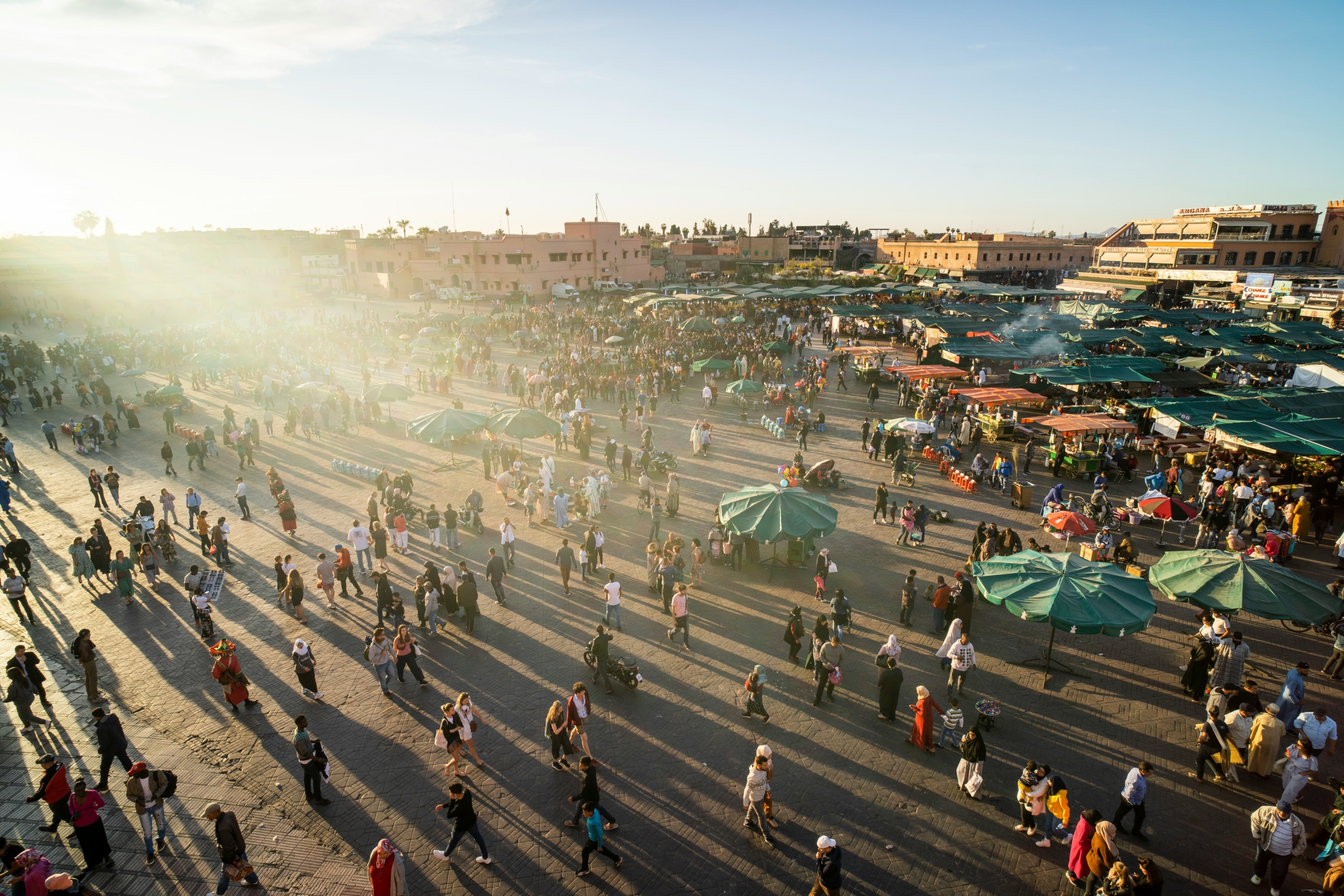
From the #RejectFinanceBill protests in Kenya to the #GenZ212 movement in Morocco, youth movements are agile, digitally savvy and they are just as comfortable speaking truth to power in the town square as they are in the digital realm. Online movements are outpacing traditional government structures, and it is those structures that will have to change in order to be responsive to young people’s needs – not the other way around.
But there is another reckoning underway too. The rise of synthetic realities born out of misinformation, disinformation, and distorted communication by malign actors. The same infrastructure that fuels movements for good can be manipulated for ill-intentions. Just as young people are rapidly embracing the freedoms that digital tools offer them, whole societies are beginning to experience the fatigue that comes with being constantly compelled to sift fact from fiction in the media they consume.
If the truth is not the same for everyone, can it be considered the truth anymore? This is the question that confronts us all.
We believe that Africa is at an inflexion point: we need to open up to the new ways of thinking and make them the engine of growth, while preventing emerging technologies and shrinking civic space being used to control this generation.
“Indifference is the deadweight of history”
This moment calls for taking sides and for doubling down on opportunities. It requires constant insights and engagement, to understand how the shifts are materialising and playing out, to better understand needs, and to identify likely and unlikely champions.
Don’t get us wrong: the shifts described here will play out with or without deliberate intervention. The question is who shapes them and how, and with intent or reactively. We work with the people who have decided that they want to not just be actors, but be citizens, be partisan.
If this sounds like you, and you are looking for a partner to not only navigate the evolving future, but shape it, contact our Futures team at [email protected]

Proud to be BCorp. We are part of the global movement for an inclusive, equitable, and regenerative economic system. Learn more