We are excited to announce that Brink is now part of Africa Practice. Learn more
How Africa is moving towards production sovereignty
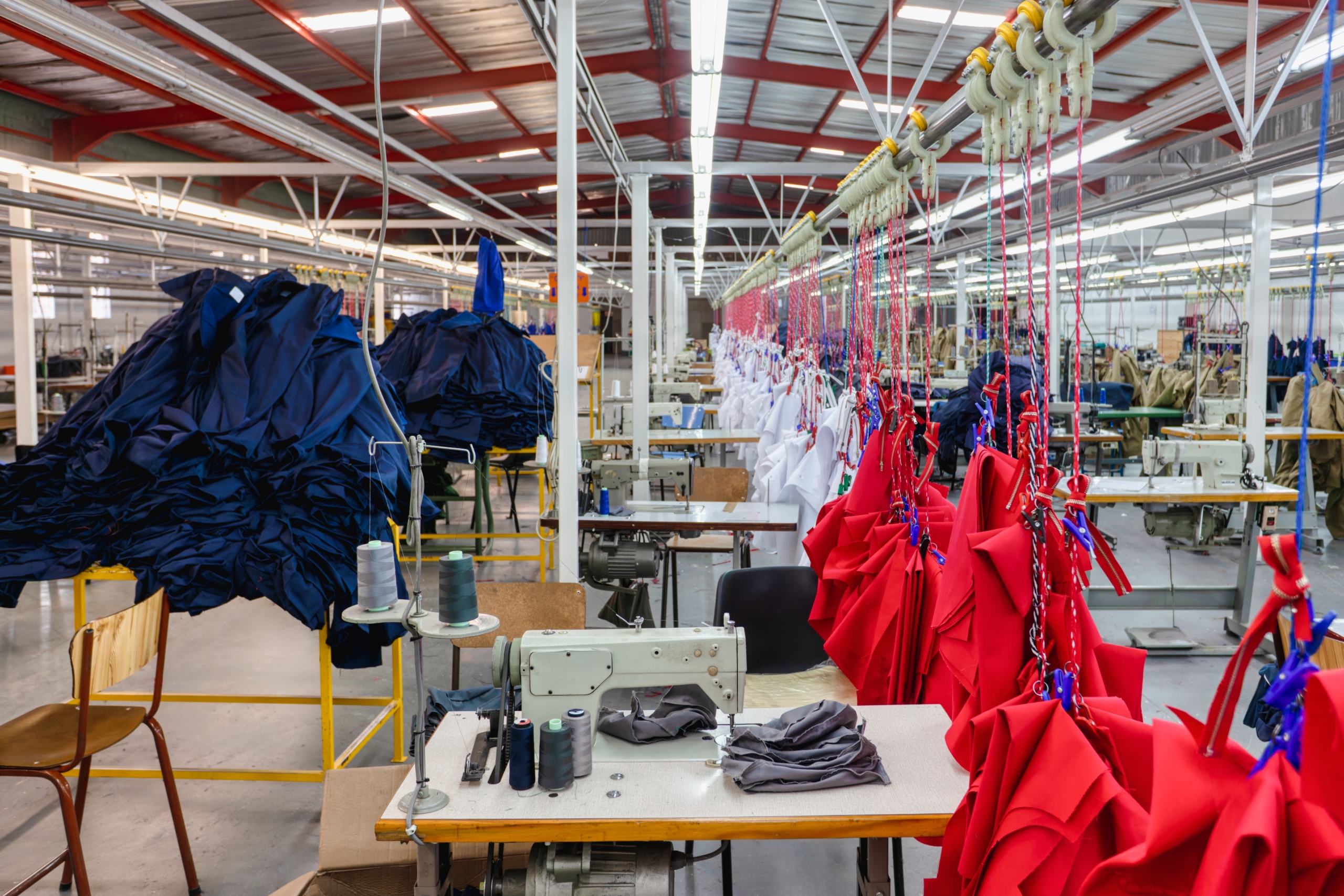
Africa is moving from the old world order ‘compliance’ status quo to production independence, signalling a fundamental strategic shift.
Fuelled by the demise of USAID and the decline of aid overall, and epitomised by the “Accra reset”, African policymakers are moving from a defensive “compliance” stance toward an offensive one centred on achieving production sovereignty.
While a full break from the old system is not yet established, and the pressure to trade sovereignty for aid is still acute, a fundamental strategic shift is now visible across many African capitals and rural areas.
For decades, the continent’s economy was a trap: export raw materials, import finished goods and ship out the value-added jobs in the process. It was a costly paradox, in which local consumption relied on foreign production and intellectual property. That era is ending, accelerated by the shifts in the global donor landscape. A growing number of African policymakers are abandoning the posture of rule-takers for that of strategic risk-takers.
The Covid-19 pandemic exposed the extreme vulnerability of African nations to shocks in the global supply chain and the weaponisation of trade by superpowers. In response, a legitimate drive for true sovereignty has emerged. This is not a call for isolationism, but for local resource sovereignty – the ability to process minerals, manufacture pharmaceuticals, produce food and invest in the underlying research and development for innovation within the continent’s borders.
The message to international corporations is unambiguous: the time for merely selling finished goods to African consumers is drawing to a close. A new, equally clear mandate is now in effect: “Collaborate with us to construct our nations’ sovereign production capabilities.”
The return of industrial policy
Across the continent, governments are enacting sharp reforms to boost local manufacturing and punish reliance on imports. The focus has shifted from vague promises to the specific mechanisms of tax and regulation.
In Nigeria, the Tax Reform Act, signed in mid-2025, now exempts small manufacturers from corporate income tax entirely. Crucially, the state grants a 5% tax credit for capital expenditure on machinery, rewarding factory capacity over mere inventory.
In Egypt, “Law No. 6” offers simplified tax breaks for small industrial firms, while a “Golden License” scheme now allows factories to bypass bureaucratic hurdles with a single approval.
Ethiopia, meanwhile, has pivoted to import substitution. Its industrial parks, once the preserve of foreign exporters, are now open to local companies. The aim is to replace 96 categories of imports with home-grown alternatives within three years.
In Kenya the 2025 Budget Policy Statement aggressively pushed the “Bottom-up Economic Transformation Agenda” (BETA). A key pillar is the establishment of County Aggregation and Industrial Parks (CAIPs) in rural areas. These parks effectively force value addition to happen closer to the farm gate, stopping the wasteful transport of raw agricultural produce.
In Rwanda the 2024/25 budget zeroed all import duties on raw materials for textiles and footwear while simultaneously hiking tariffs on imported second-hand clothes. This is a classic industrial policy play: make it cheap to produce at home and expensive to import from abroad. There’s a trade off here, as second-hand clothing and recycling is a major low-income job guarantor, and many consumers can’t afford expensive local products.
In Ghana, to reduce reliance on foreign goods the government has tightened local content laws in the oil and gas sector, mandating that procurement for engineering and services must favour Ghanaian firms. This forces multinationals to transfer technology and build local industrial capacity rather than just extracting resources.
Guinea is the world’s largest bauxite exporter, holding 25% of global reserves. Its government has ordered companies to submit realistic alumina-refinery timetables, with non-compliance potentially leading to fines or licence cancellation. The overall message from the government in 2025 has been clear: “build locally, hire locally, pay locally – or leave.”
At a continental level, the Africa Centres for Disease Control and Prevention (Africa CDC) has called for a new public health order. It explicitly demands that international partners (such as the Gavi vaccine programme and UNICEF) purchase at least 30% of their global vaccine procurement from African manufacturers. The African Medicines Agency (AMA) is working to harmonise regulations so that medicines approved by the AMA can be quickly accepted by member states.
Drive for data sovereignty
The drive for sovereignty extends beyond the factory gate to the cloud. As emerging technologies such as advanced artificial intelligence reshape business landscapes, African leaders are wary of “data colonialism” – a new extraction model in which data flows North and products flow South. Without local infrastructure, the continent risks feeding the algorithms of others, repeating the mineral failures of the past.
Rwanda and Namibia are correcting this. By investing in digital public infrastructure (DPI) they are turning data into a development asset. Interoperable data exchange platforms will allow schools to signal health risks and councils to optimise agriculture. This is the modern face of production: not just steel and cement, but integrated intelligence.
Meanwhile, at a continental level, a series of continental DPI standards are being developed to support the responsible, inclusive and ethical roll-out of EdTech, TeleMed and other applications. Nations such as Nigeria are directly investing in national large language models (LLMs).
Inspired by the Africa CDC, a growing number of African nations are now rejecting new American aid deals and the US administration’s “America First Global Health Strategy” over concerns that they require handing over their citizens’ health, genomic and population data to foreign entities.
Incrementalism must end
This shift is a necessity, not a choice. With a billion people under the age of 25 by 2050, the old model of high debt and low productivity is a recipe for unrest.
The great leaps of past industrial revolutions were never born of corporate caution or policy-maker timidity; they were the product of a singular, ruthless focus on productive growth. We must reject the comfort of a failing global development architecture. The moment has come to pivot from fragmented, defensive strategies to a unified, offensive continental stance.
Such a stance requires African nations to seize control of their own narratives, work together to rewrite the global rules of engagement with their own priorities and radically reimagine African markets. This ambition can succeed only if the brave few continue to lead, their peers learn and follow, continental frameworks provide the structure and global industry finally recognises that its own long – term interest lies in this transformation – in turning Africa’s youth bulge into the world’s most powerful demographic dividend.
The time for incremental gains is over. Success is now contingent on a unified, uncompromising focus on productive growth.
This article was first published in African Business Magazine.


Proud to be BCorp. We are part of the global movement for an inclusive, equitable, and regenerative economic system. Learn more