We are excited to announce that Brink is now part of Africa Practice. Learn more
A Mandate Without Consensus: Ethiopia After the 2026 General Election
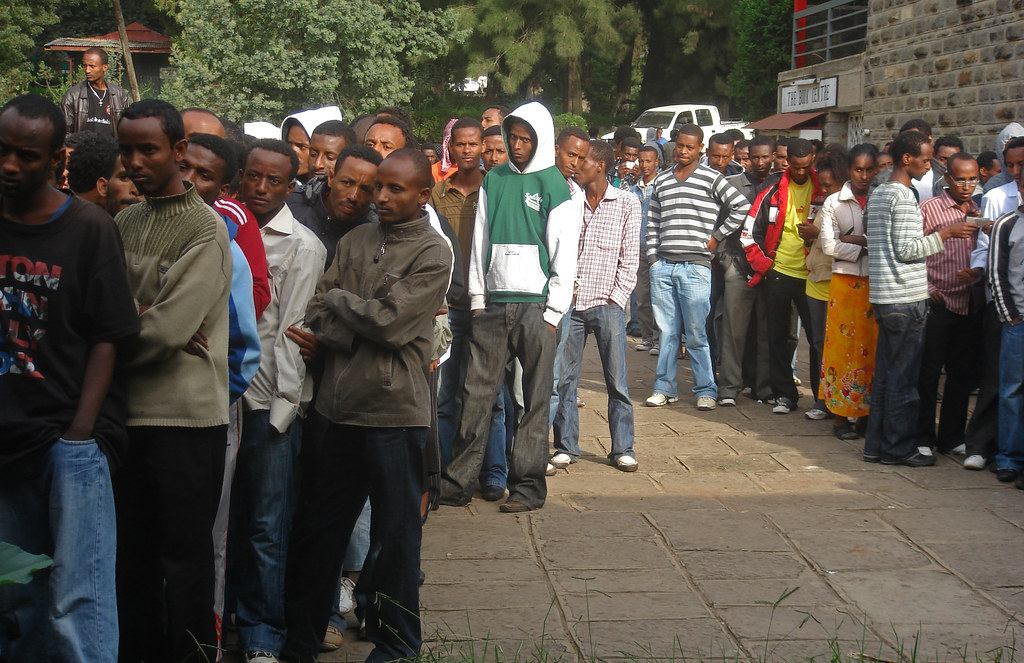
Ethiopia’s seventh general election on 1 June 2026 was heavily promoted by the federal government as a milestone of economic modernisation and civic resilience. Over 50 million citizens registered – an increase of approximately 34% from the 37.4 million registered for the 2021 election – with women and youth accounting for a significant share of the electorate. However, the election played out precisely as pre-election scenarios foreshadowed, delivering a partial process that reinforces the ruling Prosperity Party’s dominance while exposing deep geographic and social fissures. While voter turnout remained relatively high at around 70%, it was significantly lower than the 99.6% recorded in 2021 and 93% in 2015, suggesting a more subdued level of participation amid persistent insecurity, economic pressures, and voter disengagement.
A predictable pattern of regional exclusion
The central question ahead of the 1 June vote was whether a credible national poll could be conducted amid active domestic insurgencies. The reality on the ground provided a clear answer. Polling was suspended across the entire Tigray region for the second consecutive time due to unresolved post-war political tensions and territorial disputes. Meanwhile, the Fano insurgency forced the cancellation of voting in 8 constituencies across Amhara. In addition, security incidents on election day kept at least 143 polling stations closed in Amhara and Oromia. Collectively, these disruptions likely prevented 5-6 million registered voters from participating in the poll.
Prime Minister Abiy Ahmed’s Prosperity Party may be on course for a landslide victory, but its renewed mandate remains unevenly distributed. Conducting a national election that excluded large parts of the country’s second- and third-most populous regions is likely to deepen existing grievances. While the federal government has sought to address longstanding political divisions through the ongoing National Dialogue process, the initiative has struggled to secure the participation and confidence of several key opposition and armed actors due to concerns over its independence, representativeness, and ability to address the root causes of Ethiopia’s political conflicts.
Innovation and exclusion
The Intergovernmental Authority on Development (IGAD) characterised the poll as an “election of many firsts”, driven in part by the rollout of the locally developed Mirchaye digital voter registration system. 5.5 million used the platform, signalling a notable step towards electoral modernisation. Yet this technological progress contrasted sharply with conditions in conflict-affected areas, where damaged infrastructure and communication disruptions constrained participation. Notably, 29,000 internally displaced persons (IDPs) were unable to vote on election day and instead participated through special voting arrangements held on 9 June in designated camps and shelters. This number is only a small fraction of Ethiopia’s displaced population, which is estimated at more than 2 million people.
The election also did little to alleviate the socio-economic pressures facing much of the electorate. While the government campaigned on the long-term benefits of its Homegrown Economic Reform Agenda, many citizens remain affected by elevated living costs. Inflation remains above 13.4%, with food inflation rising for a third consecutive month, a particularly sensitive issue given the prominence of food costs in household expenditure. Combined with youth unemployment of around 20% and the lingering effects of exchange-rate liberalisation on purchasing power, these pressures have tempered public enthusiasm for the government’s reform agenda.
The draft ETB 2.3 trillion (USD 14.5 billion) budget for FY 2026/27 represents an ostensible increase in local currency terms but is effectively stagnant in US dollar terms due to the Birr’s depreciation. The budget proposal has drawn scrutiny in parliament, where lawmakers challenged the executive’s increasingly ambitious economic outlook. The criticism points to growing unease with the scale of the government’s fiscal optimism, even though parliamentary approval has historically tended to track executive recommendations.
Outlook
With the Prosperity Party expected to retain an overwhelming majority in the House of Peoples’ Representatives, Ethiopia’s policy direction is set to remain largely unchanged. The federal government is likely to accelerate market liberalisation, financial sector reform, and privatisation efforts to maintain support from international financial institutions and attract foreign investment. The election outcome offers limited indication that the government will pursue significant changes to its approach towards conflict resolution or political representation. As was the case following the 2021 election, the House of Peoples’ Representatives is likely to continue functioning despite unfilled seats in conflict-affected constituencies. Targeted cabinet and institutional reshuffles are expected once the Prime Minister takes office to strengthen the implementation of economic reforms and manage emerging political pressures.
Regionally, the government is expected to maintain its focus on securing access to the sea, advancing economic integration in the Horn of Africa, and rebuilding relations with key partners. However, tensions with Eritrea, instability in Sudan, and lingering disputes with Somalia continue to complicate Ethiopia’s diplomatic environment and could periodically divert political attention and resources away from domestic reform priorities.
Proud to be BCorp. We are part of the global movement for an inclusive, equitable, and regenerative economic system. Learn more