We are excited to announce that Brink is now part of Africa Practice. Learn more
When the rules break: Pressure, not persuasion
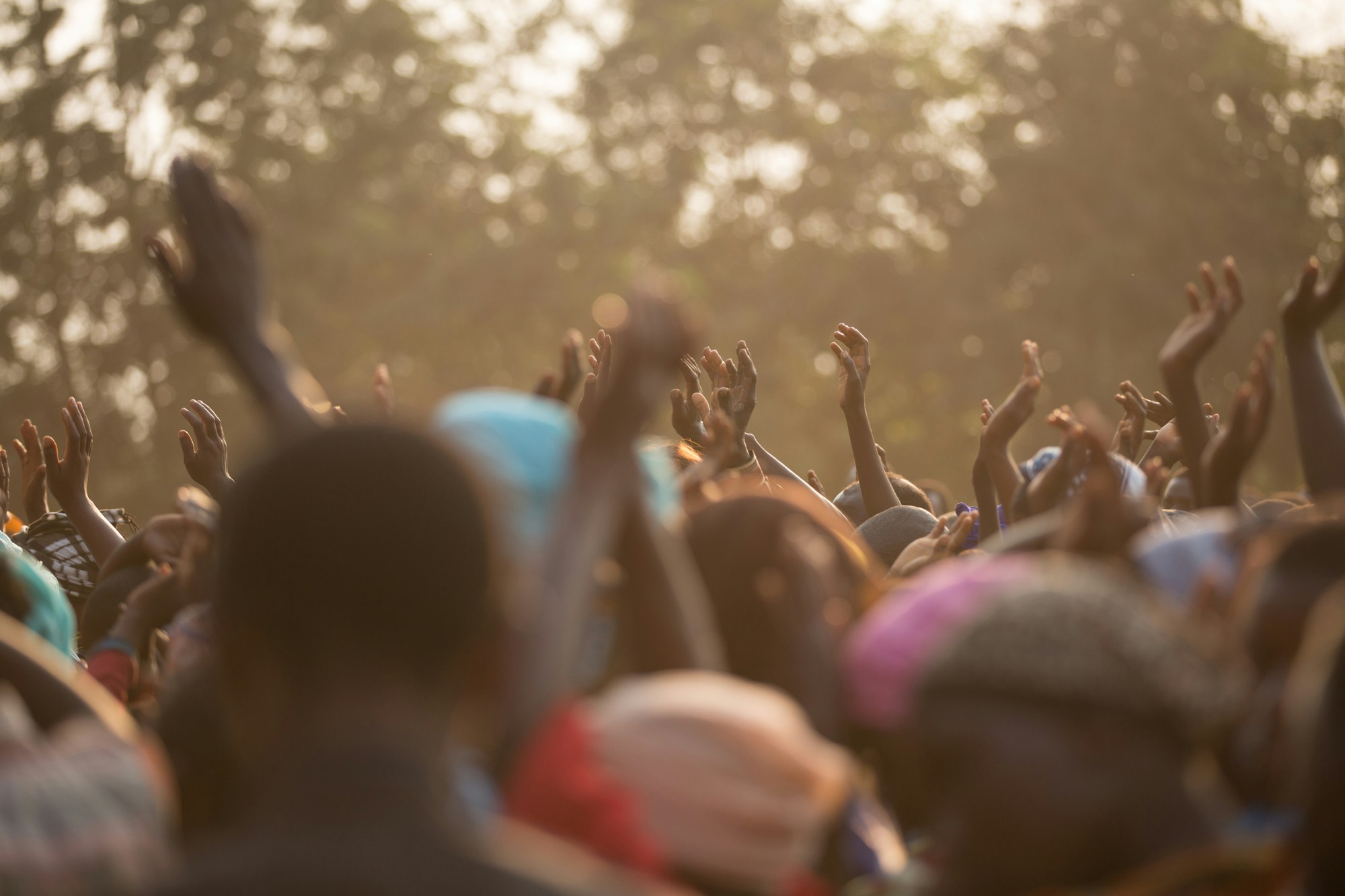
In 2025, across Africa, leaderless, digital-first movements began toppling governments, mobilising hundreds of thousands in days, and shattering the illusion of ruling party consensus — heavily outpacing traditional government structures. These are not isolated incidents. They are what happens when a state loses the population before it loses power.
Africa is entering a period of profound structural reckoning as the 20th-century nation-state is currently caught in a pincer movement. From above, it is being hollowed out by an ultra-rich elite who hold USD 18.3 trillion in global capital and are 4,000 times more likely to dictate political outcomes than average citizens. From below, state authority is being bypassed by shadow economies that generate up to 7% of global GDP, often providing the local liquidity and security that central governments fail to deliver.
To survive this erosion, and the citizen pressure that now makes it visible, the nation state must stop trying to command control from a distance and start earning legitimacy through proximity. Its survival depends entirely on closing the gap created by the shadow economy and returning to the fundamental mandate of providing for its people.
Both history and current events point to the same conclusion: the state will not pivot willingly. It must be incentivised.
The illusion of voluntary class suicide:
Amílcar Cabral, an agronomist who became the organiser and leader of Guinea-Bissau’s revolution against Portuguese colonialism, argued that the “petty bourgeoisie”, the educated administrators and civil servants who would inherit the state apparatus upon decolonisation, Africa’s post-independence governing class, faced an unavoidable choice: To serve the nation truly, they must “commit suicide as a class”, or become what Frantz Fanon predicted they would, a useless “national bourgeoisie,” acting merely as a greedy caste of intermediaries for foreign capital without fundamentally changing the extractive system.
For decades, the African political and corporate elite have chosen the latter, insulated by lucrative, closed-door Business-to-Government (B2G) networks, acting as intermediaries that export the continent’s raw value — its minerals, genomics, and data — while importing high-priced finished goods. They maintained this status quo because the pressure to change was manageable.
That calculus has now broken.
The unstoppable force in the digital town square
The forcing function compelling the state to change its priorities is Africa’s youth. With a median age of 19, this demographic is an “unstoppable force” that has been entirely locked out of the traditional economy. Fanon once controversially dismissed the colonial urban proletariat as a “pampered” class that had “everything to lose” and was therefore reluctant to attack the system. Today, that dynamic has inverted. With urban youth unemployment hitting nearly 50% in places like Morocco, the modern civic force has little to lose and everything to gain.
- In Madagascar, a decentralised Gen Z movement born online rallied around the Jolly Roger flag from the manga One Piece — a global pop-culture symbol of fighting corrupt world governments, fused with a traditional Malagasy hat. Organising over encrypted platforms, they bypassed state media and chanted “we want to live”. The pressure they generated was so intense and relatable throughout the country that it drove the country’s elite military unit (CAPSAT) to defect, ultimately toppling the president on 12 October 2025.
- In Morocco, the #GenZ212 movement mobilised over 120,000 members in a matter of days in September 2025, using platforms like Discord and TikTok. Sparked by maternal deaths in a dilapidated public hospital in Agadir, the youth bypassed traditional political parties to demand social justice, dignity, and the fall of corruption.
- In Tanzania, an unprecedented post-election uprising in October 2025 shattered the illusion of the ruling party’s peaceful consensus, leading to a severe state crackdown that permanently altered the country’s political landscape.
The danger of synthetic realities
Terrified by this digital mobilisation, autocratic elites are increasingly weaponising the internet’s regulatory vacuum. They are substituting material development with “synthetic realities” — using misinformation and disinformation as new tools of control to shrink civic space.
2026 has been dubbed the Year of the African Cloud, as countries like Rwanda, South Africa, and Ghana work to establish sovereign data centres to reclaim control from Western tech giants. Yet, the same infrastructure presented as digital sovereignty is simultaneously used to map activist networks. This is compounded by a ticking clock: the “Harvest Now, Decrypt Later” strategy, in which adversaries are already hoarding today’s encrypted traffic to be decrypted by future quantum computers. Today’s dissent is being stored to become tomorrow’s tool for repression. For the 19-year-old activist in 2026, their current “secure” communications are effectively a time bomb; every private message sent today could be used decades later for state persecution, creating a chilling effect that fundamentally alters the risk calculus for political engagement.
When the state cannot deliver proximity, it purchases propaganda. Internal documents uncovered by Forbidden Stories, an international network of investigative journalists, recently exposed the sprawling operations of “The Company,” a Russian disinformation network formerly run by Yevgeny Prigozhin, the deceased founder of the Wagner Group and a key player in Russian disinformation circles, and now overseen by Russia’s Foreign Intelligence Service (SVR). Operating with a budget of USD 7.3 million over just 10 months in 2024, this network treated the Global South as a laboratory for psychological warfare.
These foreign operatives are hired to reformat the African informational space and artificially consolidate the power of friendly regimes. They fabricated letters in Namibia to discredit political opposition, operated mirror websites to spread disinformation about infrastructure projects in Angola, and even drafted scenarios to manage civil protests and military takeovers in Senegal.
This is the greatest danger of the civic inflexion point. When truth is no longer universal, the “liar’s dividend”, where real evidence is dismissed as fake and fake media is embraced as truth, prospers. If national governments actively participate in the distortion of truth to cling to power, they forfeit their ultimate legitimacy, accelerating their own hollowing out. For any organisation whose operating environment depends on a stable information landscape, this is not a governance problem. It is a business risk
The pragmatic reality of the shifts
We must not romanticise this civic awakening. As Amílcar Cabral explicitly warned, “the people do not fight for ideas, for the things in anyone’s head. They fight to win material benefits, to live better and in peace, to see their lives go forward, to guarantee the future of their children”.
When we look at the streets of Antananarivo or Agadir, the youth are not protesting for abstract ideological concepts; their demands are desperately pragmatic.
- In Madagascar, the movement was triggered by the daily reality of blackouts, unreliable water taps, and rising food prices.
- In Morocco, the catalyst was the death of pregnant women in a dilapidated public hospital, contrasting bitterly with the government spending over USD 5 billion on football stadiums for the 2030 World Cup.
The protesters are demanding basic health, electricity, jobs, and affordable food today. Firstly, when the youth in Morocco chant “Health first, we don’t want the World Cup”, they are fighting the downstream, lived effects of the “extraction trap”. They are demanding that national wealth—whether critical minerals or state budgets—be used to fund local capacity, like functioning hospitals and power grids, rather than being siphoned off by corrupt elites or foreign agreements.
Secondly, when youth take to the streets against urban unemployment rates hitting 50%, they are living the reality of the “terminal fiscal paradox”. The traditional pathways of manufacturing jobs are closing. The theoretical need for a “high-value human economy” is experienced on the streets as a desperate, immediate demand for work and dignity.
The corporate mandate: bridging survival and the future
This creates a profound tension for organisations operating in Africa, requiring a fundamental recalibration of strategy. The state remains a crucial actor for regulatory frameworks, but treating the state as the sole guarantor of stability is now a fatal exposure.
Organisations must urgently integrate a Business-to-Population (B2P) strategy. Populations struggling to eat, work, and provide in the short term do not have the patience for empty words or distant, long-term corporate promises. To earn their “human license to operate,” businesses must communicate openly and transparently with the population. They must clearly demonstrate how their presence provides immediate, tangible benefits—like jobs and infrastructure—while honestly communicating why long-term projects are worth the wait.
Trust is no longer secured on a five-year election cycle or through government-backed synthetic realities; it is a daily negotiation in the digital town square. Businesses must prove their ethical citizenship daily, aligning their operations with the urgent, pragmatic demands of a generation that is fighting simply for the right to live.
Proud to be BCorp. We are part of the global movement for an inclusive, equitable, and regenerative economic system. Learn more