We are excited to announce that Brink is now part of Africa Practice. Learn more
Wasted gas, wasted opportunity: Africa’s case for methane abatement
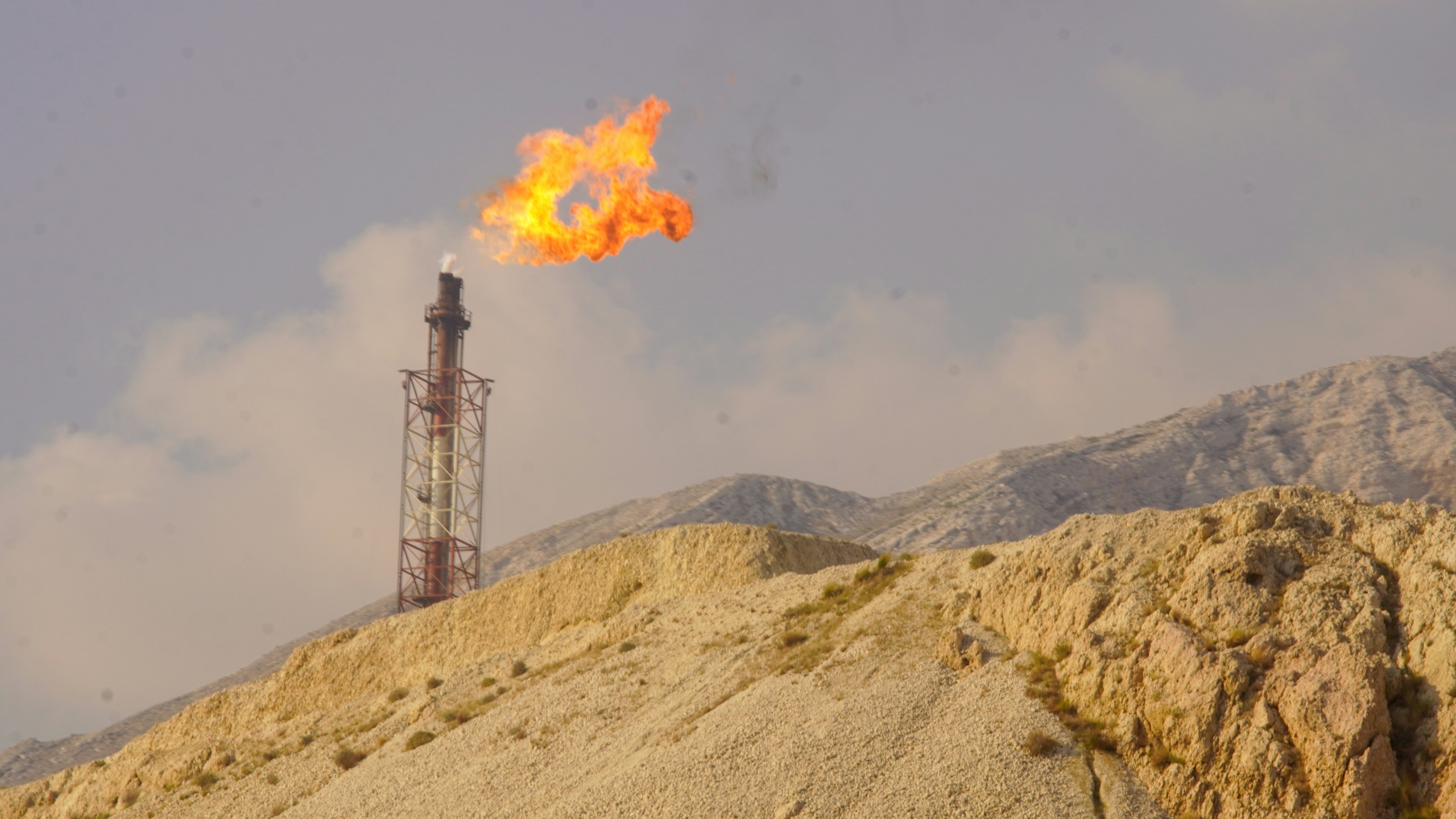
Offshore of Takoradi, Ghana’s energy hub, the night sky is changing. Historically, the oil and gas industry has been highly visible due to the orange glow of routine flaring – literally burning valuable energy into the atmosphere. Now, Ghana – the host of this year’s Africa Oil Week (AOW) – is leading a dramatic transformation.
Ghana’s oil and gas sector is closing in on the Petroleum Commission’s 2026 deadline to end routine flaring, alongside new methane monitoring requirements introduced by the Environmental Protection Authority. Instead of wasting valuable energy, Ghanaian operators now capture gas and redirect it into a national pipeline network that feeds domestic power plants for local industries and homes.
As we approach Africa Oil Week, what’s happening in Ghana should be a clarion call across the continent. We can no longer treat methane emissions from Africa’s oil and gas sector as an environmental checkbox or a compliance headache. Reducing methane is our opportunity to reduce climate change, tackle energy poverty, and set our energy industry on a sustainable path.
Why methane?
Methane represents a complex duality in the global energy landscape: it is a significant climate threat and a lost economic resource. As a greenhouse gas, methane is exceptionally potent; in a 20-year timeframe, it possesses 84 times the global warming potential of carbon dioxide. While Africa contributes only 4% to overall global greenhouse gas emissions, its share of global methane is disproportionately large at 14% today – a figure projected to reach 16% by 2050. Nearly half (48%) of these emissions originate from the oil and gas sector.
Because it is also the primary component of natural gas, fossil fuel methane emissions from leaks, venting, and flaring are a measurable and highly cost-effective opportunity for abatement. Addressing these emissions is one of the most powerful near-term levers available to slow global warming while simultaneously reclaiming lost value. Every molecule of methane that leaks, vents, or is flared is wasted gas that cannot generate revenue, support domestic energy supply, or strengthen export earnings.
The economic imperative
The stakes of methane management are particularly high for Africa. This waste occurs against a backdrop of severe energy poverty, with 600 million people across the continent lacking electricity access. The 29 billion cubic meters (bcm) of annual wasted natural gas could address domestic energy deficits, equivalent to 173,250 GWh of electricity or 300 LNG tankers.
In many developing and rural regions undergoing initial electrification, basic household needs (lighting, phone charging, refrigeration, and fan usage) consume around 500 kWh annually. At this level, 173.25 billion kWh would power approximately 346 million homes. In addition to the environmental necessity of capturing this gas, it also creates a pathway to energy security and fiscal growth.
Regulatory momentum
International commodity market pressures are accelerating the shift toward methane abatement. Momentum comes from major LNG importers, Japan and South Korea, as well as the European Union (EU). The EU Methane Regulation (EUMR) is set to impose methane intensity requirements on imports to the bloc, establishing a clear incentive for first move African suppliers to ensure market integration and expand market share in the EU. To ensure optimum market positioning, African suppliers need to be cognisant of the implementation timelines:
- 2025–2026: Initial sharing of importer data and the establishment of a centralised transparency database for crude oil and natural gas.
- 2027: Mandatory Measurement, Monitoring, Reporting, and Verification (MMRV) obligations for all new import contracts.
- 2030: Full demonstration that methane intensity falls below a maximum threshold that has yet to be established.
Industry momentum & financial hurdles
Proactive African states are taking action to align national frameworks and practices with international benchmarks. Leading national oil companies including Nigeria’s NNPC, Angola’s Sonangol, and Libya’s NOC, have all joined the Oil & Gas Methane Partnership 2.0 (OGMP 2.0), a measurement-based international reporting framework that offers a path for compliance with the EUMR. Additionally, Nigeria, Ghana, and Côte d’Ivoire have published dedicated Methane Action Plans.
However, financial barriers remain. Despite the IEA estimating that 70% of emissions can be abated using existing technology – and 45% at no net cost – these projects must compete for capital with high-return exploration ventures.
Historically, abatement projects have struggled to demonstrate that they can offer the same returns as much larger but riskier exploration ventures, which are prized by oil executives. Externally, strict sustainable finance rules often prevent climate funds from investing in hydrocarbons projects, even when funds are earmarked for decarbonisation. This is beginning to change.
The primary obstacle is no longer a lack of technological solutions; rather, it is the fundamental need to structure projects so that capital markets can clearly identify their intrinsic value. This necessitates the development of robust, project-specific business cases underpinned by transparent emissions data. Success requires a sophisticated mix of financing mechanisms and deep alignment between upstream operators, national authorities, development finance institutions, and private lenders.
The methane opportunity
As the global energy investors, operators, governments and regulators gather in Accra for AOW, we find ourselves at a critical juncture. Methane is more than an external global threat. It can be a powerful lever for positive change. The scale of opportunity shows that gas capture projects can strengthen fiscal revenues and generate higher profits for NOCs, while either increasing forex earnings from gas exports or boosting gas supplies to local industries and households, combatting energy poverty.
Proactive methane management offers a unique opportunity to align environmental stewardship with economic pragmatism. By treating methane as a strategic asset rather than tolerating waste and inefficiency from operations, African nations can safeguard their export markets, attract new investment, and provide the energy necessary to power the continent’s future.
AOW provides a strategic venue for stakeholders across the energy ecosystem to align on action:
- Industry operators: Must prioritise high-precision measurement to identify the most commercially viable abatement opportunities and build a pipeline of bankable projects.
- Governments and regulators: Should establish enforceable mandates while aligning national MMR frameworks with emerging global benchmarks.
- Financial institutions: Need to position methane reduction as a high-value investment frontier rather than an operational cost, facilitating collaboration to finance viable
African policymakers, corporate leaders, and financiers should come to the table to co-design market-fit solutions. By standardising cross-border petroleum regulations through forums like AFRIPERF, collaborating with continental institutions like AFREC, and leveraging transition finance, Africa can turn a potent climate pollutant into its greatest competitive advantage.
Related articles
Proud to be BCorp. We are part of the global movement for an inclusive, equitable, and regenerative economic system. Learn more